


St Augustine's CE Primary School in Dunstable serves a diverse community. The one-form-entry Church of England primary school supports a growing number of pupils with additional needs, children who speak English as an additional language, and families facing a range of social and economic challenges. Around 35% of pupils are eligible for pupil premium funding, while the school's highly inclusive approach has earned it a strong reputation for supporting children with SEND.
Alongside this, the school experiences significant pupil mobility. Throughout the year, children arrive from other schools, new housing developments, different countries and, at times, refugee backgrounds. Some may only be part of the school community for a short period before moving on again, with up to 25% of pupils changing each year.
For Headteacher Amanda Howes, EYFS lead practitioner Emma Rickman, and leader Mandy Wykes, this presents an important question: how do you create a strong sense of community and belonging when pupils arrive with such different experiences, backgrounds and journeys?
Their answer begins with relationships, and a commitment to nurturing every child which sits at the heart of the school's ethos. As a Church of England school, St Augustine's places a strong emphasis on respect, inclusion and human flourishing. Staff work hard to ensure children feel seen, valued and connected, both to one another and to the wider world beyond their immediate surroundings, and Lyfta plays a big part in this.
For many pupils, opportunities to encounter different cultures, communities and ways of life can be limited. As Mandy reflected, some children's experience of the wider world extends little beyond their local area. Yet curiosity about the world is something the school actively seeks to cultivate throughout the curriculum.
Over the past several years, Lyfta has become an important part of that work. What was clear on my visit is that the school has embedded Lyfta into the fabric of school life, helping pupils develop empathy, broaden their horizons and build a deeper sense of belonging - to their school community and to the planet.
This article aims to explore this context and impact.
How does it work at St Augustine’s? A shared experience across the school
Storyworlds are carefully planned throughout the year, mapped into the school's improvement priorities, staff handbook and annual calendar. The storyworld themes are linked to collective worship themes, national awareness days, global events and the school's wider work around vocabulary, values and global citizenship, this means they are not an add on, they are a major part of what is going on in the week.
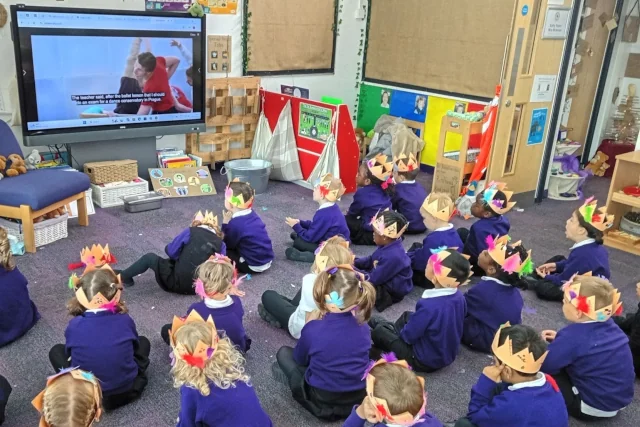
Every class explores the same Storyworld in class before coming together on Thursdays to share their reflections in collective worship. Learning is then shared beyond the classroom through newsletters and wider engagement with families, helping to extend conversations into the wider school community.
This creates a powerful, shared experience for every child and adult in the school.
For a school community where children can regularly arrive throughout the year from different backgrounds and experiences, those shared stories help create connection - you can read some of those stories below.
As Amanda explains, Lyfta becomes "something they all have in common."

Lyfta becomes "something they all have in common."

Impact examples: helping children see themselves, and others
A popular element of Lyfta is that it offers students a window into lives they may never otherwise encounter. For others, it provides something equally important: a chance to see their own experiences reflected back to them and their class, they have the opportunity to share their experiences backed by powerful content.
Staff recalled the impact of exploring a Storyworld set in Afghanistan with a KS2 pupil from Afghanistan. As images of familiar streets and shops appeared on screen, she excitedly pointed them out to her classmates: "That's what our shops are like!"
In another lesson, a pupil from Ethiopia was delighted to see her home country represented. For teachers, these moments are powerful reminders of the importance of ensuring children feel seen, recognised and valued within their learning.
At the same time, these stories help pupils develop a deeper understanding of one another. When asked what they had learned through Lyfta, one pupil reflected that "many people have different experiences and backgrounds that you can't see with the naked eye."
That idea was echoed throughout conversations with pupils, who spoke about understanding different cultures, beliefs, abilities and ways of life. Several talked about learning not to judge people by appearances and recognising that everyone carries their own story.
For the St Augustine’s leadership team, creating opportunities to listen, reflect and understand one another helps strengthen the sense of belonging that sits at the heart of their school community.
"many people have different experiences and backgrounds that you can't see with the naked eye."
From stories to school culture
One of my main learnings from my visit was how embedded Lyfta was in school culture - it is not confined to a single lesson each week. The stories and ideas explored in the classroom often find their way into wider conversations, actions and routines across the school community.
One example came through the school's work on sustainability. Inspired by Storyworlds exploring environmental themes and global citizenship, pupils interviewed the school cook about sourcing local produce and discussed the environmental impact of food choices. The school has since introduced separate bins for food waste, recycling and general waste, encouraging children to think about how small everyday actions can contribute to wider change.
Staff also spoke about the way pupils continue to reference Storyworld characters and themes long after a lesson has ended. Children make connections between Lyfta stories and other curriculum areas, recall details from Storyworlds they explored years earlier, and regularly bring ideas from Lyfta into classroom discussions.
The conversations often extend beyond school. Weekly learning is shared through newsletters, helping families engage with the same themes and questions being explored in class. Parents are introduced to Lyfta from the moment they join the school community, while governors have visited classrooms to see Storyworlds in action and better understand the role they play in school life.
Building empathy, belonging and global awareness is part of a broader culture that runs through the school. By creating shared experiences and shared conversations, Lyfta helps strengthen the connections between pupils, staff and families.
Turning intention into implementation
Many schools share St Augustine's commitment to developing empathy, belonging and global awareness. The challenge is often embedding them consistently across the life of the school.
Sustainable impact often depends on moving beyond individual lessons or enthusiastic champions and creating structures that support long-term implementation.
"If it's going to be invested in, it needs to be properly written into the school's improvement plan," Amanda explains.
At St Augustine's, that means Lyfta is planned into the annual calendar, embedded within staff handbooks, linked to collective worship and discussed regularly across the school community. Every class participates, creating a consistent experience for pupils regardless of year group or teacher.
This approach helps ensure that the school's commitment to empathy, belonging and global citizenship is not dependent on individual staff members or isolated activities. Instead, it becomes part of the fabric of school life.
Over time, these structures create the conditions for meaningful and measurable change. Shared language develops across year groups. Pupils revisit ideas and themes over multiple years. Discussions become deeper. Connections strengthen. What begins as a weekly Storyworld gradually becomes part of the school's culture and each step has our full support.
"If it's going to be invested in, it needs to be properly written into the school's improvement plan,"


