


Schools across Oasis Community Learning are committed to helping young people develop character, compassion and a sense of belonging alongside academic success. The Oasis 9 Habits - compassion, humility, joy, hope, patience, honesty, consideration, forgiveness and self-control - provide a shared language for values across the trust.
This impact study explored how immersive human stories supported that work in practice in two Oasis schools: Oasis Academy Woodview Primary and Oasis Academy Leesbrook Secondary.
Together, the findings show how encounters with real human stories can help pupils develop empathy, reflect on fairness and gratitude, and build a deeper sense of belonging in the classroom and beyond. The study also explored how these experiences supported the Oasis 9 Habits in practice - helping pupils discuss compassion, respect, patience, fairness and gratitude through real human situations rather than abstract statements.
Across these classrooms, students engaged not with laminated statements of values but with lived values - the kind that emerged when young people encountered real human stories, developed empathy for lives different from their own, and reflected on what inclusion, equality, hope and perseverance meant in practice.
Lyfta’s stories invited pupils into that circle - expanding their world, strengthening relational understanding, and helping them belong, grow and thrive as part of a larger human community. Across both schools, this contributed to what the study described as a developing culture of relational learning, where empathy, curiosity and dialogue became central to classroom conversations.
The sections below explore how this work unfolded in practice in two different school contexts - Oasis Academy Woodview Primary and Oasis Academy Leesbrook Secondary.
Oasis Academy Woodview Primary
Helping pupils see beyond their own world
School context and values
At Oasis Woodview, Lyfta was used to broaden horizons, increase the chances of students feeling represented in content, support intercultural capital, foster belonging and connection, and help students live out the Oasis 9 Habits - compassion, humility, joy, hope, patience, honesty, consideration, forgiveness and self-control. Teachers described how the stories helped pupils recognise themselves in diverse human experiences while also encountering perspectives very different from their own.
The school became a strong example of how regular and reflective use of Lyfta shaped understanding, empathy, and moral reasoning in primary-aged children.
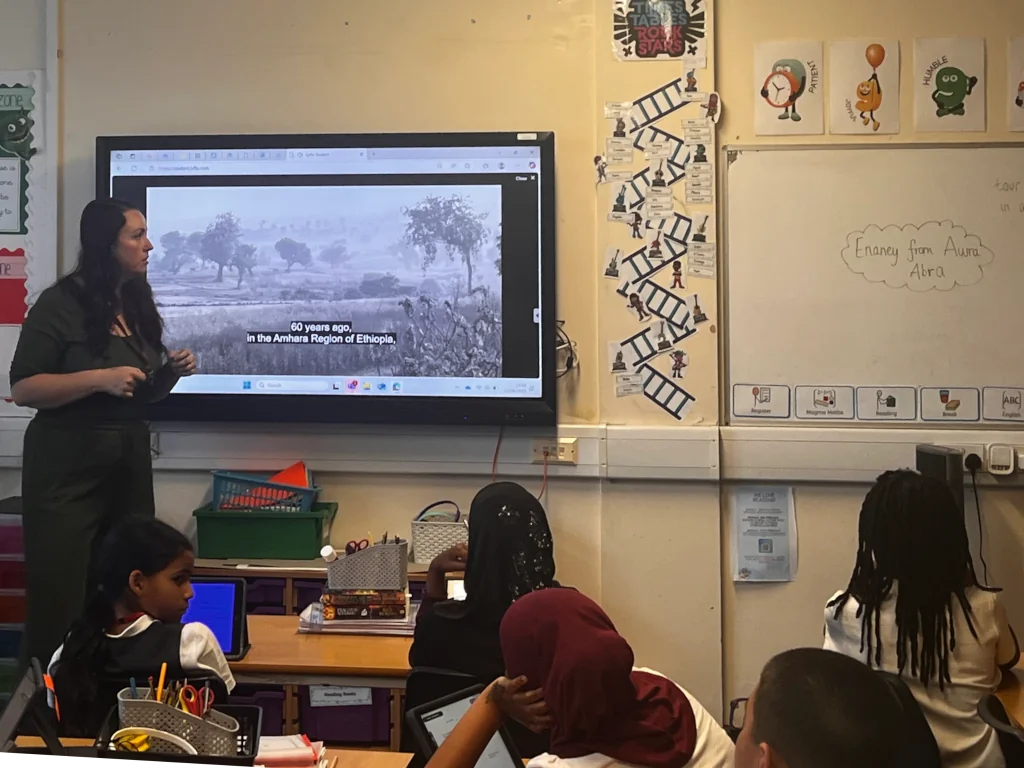
Using Lyfta to broaden horizons
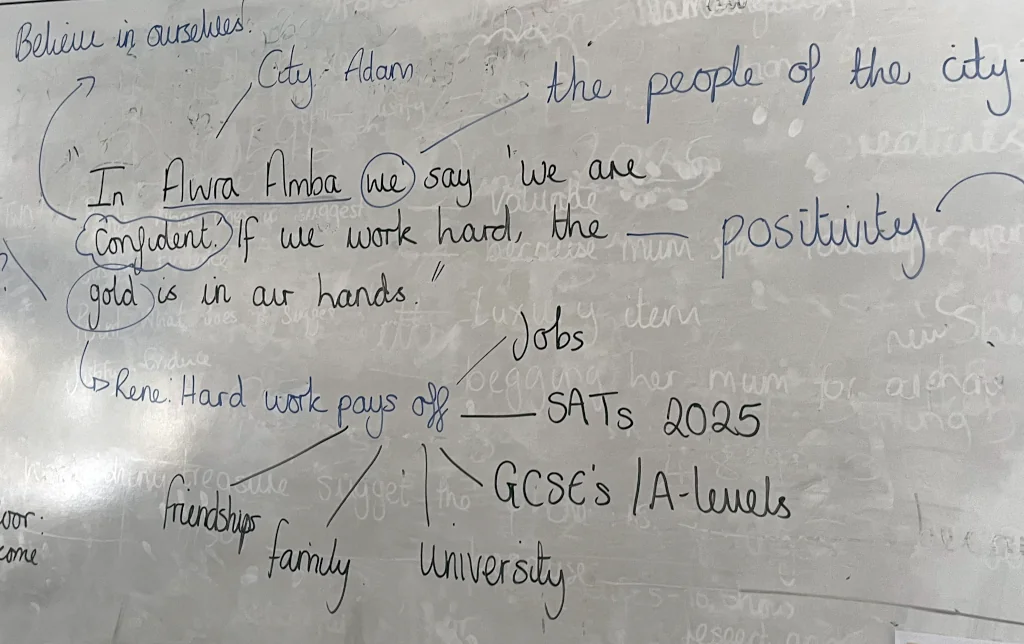
Students explored stories from Finland, the UK, Ethiopia, Turkey, the USA, Peru, Germany, China and Argentina. The most frequent themes included empathy and understanding others, resilience and perseverance, community and citizenship, culture and identity, and work ethic.
Teachers observed that these experiences helped pupils connect classroom learning to real lives around the world. In practice, Lyfta lessons often became a cross curricular catalyst, prompting discussions in PSHE, Geography, Literacy and wider classroom dialogue.
"Lyfta enables them to see a world outside of their own - those skills are life skills. It’s not something you can just teach in reading or writing."
Student voice: what pupils said
Woodview
pupil
voice
- “I wasn’t actually that grateful before - but then seeing different people’s stories made me think I should try to be more grateful.” - Year 6 pupil
- “Because we can know more about a child’s situation from different countries.” - Year 5 pupil
- “Because I got to know new people and it made me feel happy.” - Year 2 pupil
- Pupils most often used words such as kindness, respect, gratefulness and fairness when describing what they had learned.
Students frequently described how the stories helped them think differently about their own lives and the lives of others.
Teacher voice: what staff observed
Woodview
teacher
voice
- “Lyfta enables them to see a world outside of their own - those skills are life skills. It’s not something you can just teach in reading or writing.”
- “Many pupils made comments about how lucky they are compared to others.”
- “It linked really well with our school values of respect and gratitude.”
- “Enhanced discussions in PSHE, Geography, and Literacy.”
Teachers reported that the stories created opportunities for meaningful discussions across subjects.
Teachers also noticed how specific stories prompted thoughtful conversations.
"After the ballet story, boys showed increased respect for dancers."
"They remembered the Turkish market and debated fairness in pricing."
How learning unfolded in the classroom
Teaching approaches combined immersive storytelling with reflective discussion. Teachers facilitated whole-class conversations where students explored ideas together and asked questions of their own.
Students also engaged in paired and group dialogue, allowing them to share ideas and reflect collaboratively. Teachers used open-ended questions to prompt deeper thinking and built in moments for pupils to reflect on their learning and articulate their own viewpoints. These approaches included reflective prompts, structured discussion and collaborative dialogue that encouraged pupils to consider different perspectives and explain their thinking.
Impact on pupils
The study found that pupils were developing empathy, respect and gratitude through lived global experiences.
Teachers saw Lyfta as a practical and powerful tool to reinforce PSHE learning and support the Oasis 9 Habits.
Overall, the findings suggested that Lyfta helped Woodview pupils see beyond their own world, understand others, and see the value of hearing different perspectives.
Oasis Academy Leesbrook Secondary
Opening students’ minds to a more global perspective
Introducing Lyfta in PSHE and form time
At Oasis Leesbrook, Lyfta provided an accessible and meaningful way for pupils to engage with lived experiences of resilience, fairness, kindness and shared humanity.
Through PSHE sessions, assemblies and classroom discussions, students encountered stories that invited them to explore equality, human rights, empathy and perseverance.
Teachers described how these experiences broadened students’ perspectives.
"It opens students’ minds to a more global perspective."
Student voice: empathy and perspective
Leesbrook
pupil
voice
- 97.5% of students agreed that Lyfta helps them understand people who live differently to them.
- 63% said the lessons helped them imagine themselves in someone else’s situation.
- 54% said the lessons helped them understand how someone else might feel.
- “We never know someone’s backstory.”
- “It made me appreciate the things around me more.”
Student feedback showed strong evidence of empathy and perspective-taking, supported by survey responses collected during the impact study.
Thinking differently about fairness and gratitude
Students also described how the stories encouraged reflection on fairness, gratitude and life experiences.
"We never know someone’s backstory."
"It made me appreciate the things around me more."
"How hard people’s lives can be."
These reflections showed students thinking about equality, privilege and the challenges faced by others.
Student engagement and interest
Student engagement with the lessons was high. More than 80% of students said they were very or quite interested during Lyfta lessons, and no students reported being uninterested.
When asked whether they would like to do more Lyfta lessons, 95% of students responded yes or maybe.
Teacher voice: what staff noticed
Leesbrook
teacher
voice
- “It opens students’ minds to a more global perspective.”
- “It’s allowing students to empathise more and think about human challenges.”
- “We’ve had positive discussions about equality.”
- “Tutor sessions feel more meaningful and connected to real life.”
Teachers observed increased empathy, curiosity and thoughtful discussion during lessons.
Teachers also noted that Lyfta’s visual storytelling provided accessible entry points for discussion, helping students explore complex themes in a relatable way.
Learning beyond the lesson
Students often remembered specific stories and continued discussing them outside the classroom. Teachers reported that pupils frequently recalled particular storyworlds and characters after lessons and used them as reference points in later discussions. Many recalled environmental stories, beekeeping and the challenges faced by people in Ethiopia.
This ability to recall and talk about stories beyond the lesson suggested that the experiences created memorable and meaningful learning.
Impact on students
Students recognised elements of themselves in diverse human stories and described a growing understanding of how people support one another across communities.
Teacher and student feedback together pointed to a developing culture of relational learning, where empathy, fairness and curiosity played a central role in classroom dialogue.
A shared language of empathy, belonging and global connection
Across both schools, the impact study highlighted how immersive human stories supported empathy, reflection and global awareness.
Students were not simply watching stories - they were beginning to think differently about the world and their place in it.
Teachers described how the stories helped make compassion and empathy real, creating opportunities for pupils to discuss fairness, respect and shared humanity.
Through these experiences, Lyfta helped pupils explore what it means to belong to a wider human community while developing the curiosity, understanding and empathy needed to engage with the world around them.


