


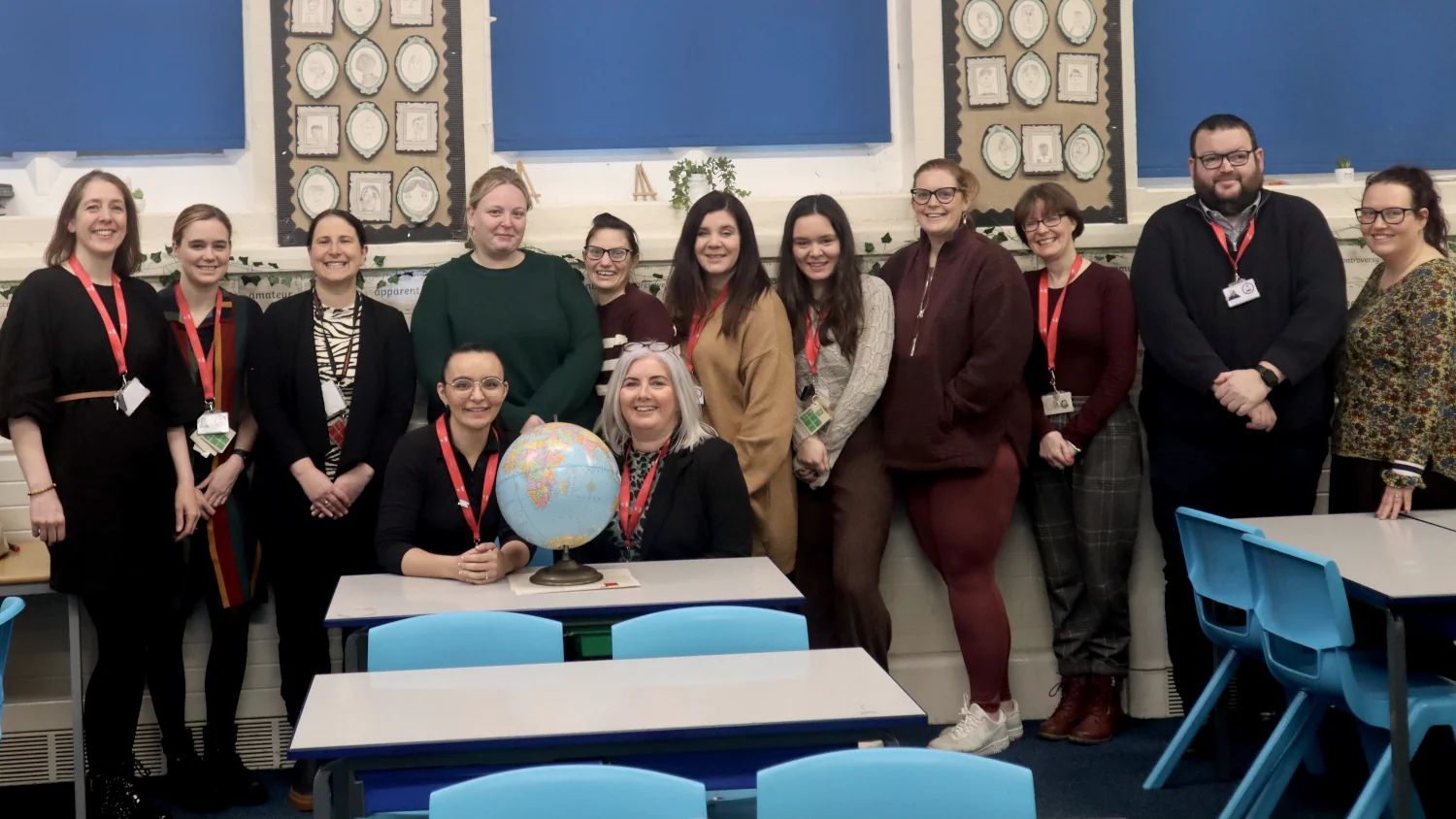
St Mary's, a part of Watergrove Trust in Rochdale, serves a community with high socio-economic disadvantage and rising complexity of need: around 50% of pupils are Pupil Premium, SEND is high (22% on the SEND register), and EHCP levels are above average. The work of progressing children’s learning is inseparable from helping them arrive ready to learn.
This context has shaped a clear purpose for Lyfta: to support children’s emotional wellbeing and readiness to learn, and to strengthen talk - especially for those currently working at lower attainment levels.
The two headline aims
Emotional wellbeing & self-regulation
St Mary’s uses Lyfta to help pupils:
- recognise and name emotions,
- practise regulating responses,
- and transfer strategies into real life.
Oracy
The trust has a big focus on oracy, and Lyfta is a part of supporting students to strengthen their communication skills in areas that may be challenging in other curriculum areas. The school wants children to build:
- free flowing conversation opportunities
- curiosity and respectful questioning
- language and communication skills to support feelings of connection and belonging

Fran (the school’s brilliant Lyfta Lead) describes this as helping children “talk about how they’re feeling, their emotions and their regulations, and how we can adapt them into our real life.”

The weekly routine (copyable in any primary)
St Mary’s approach is intentionally structured so it is consistent for staff and accessible for children and there are regular and frequent engagement points :
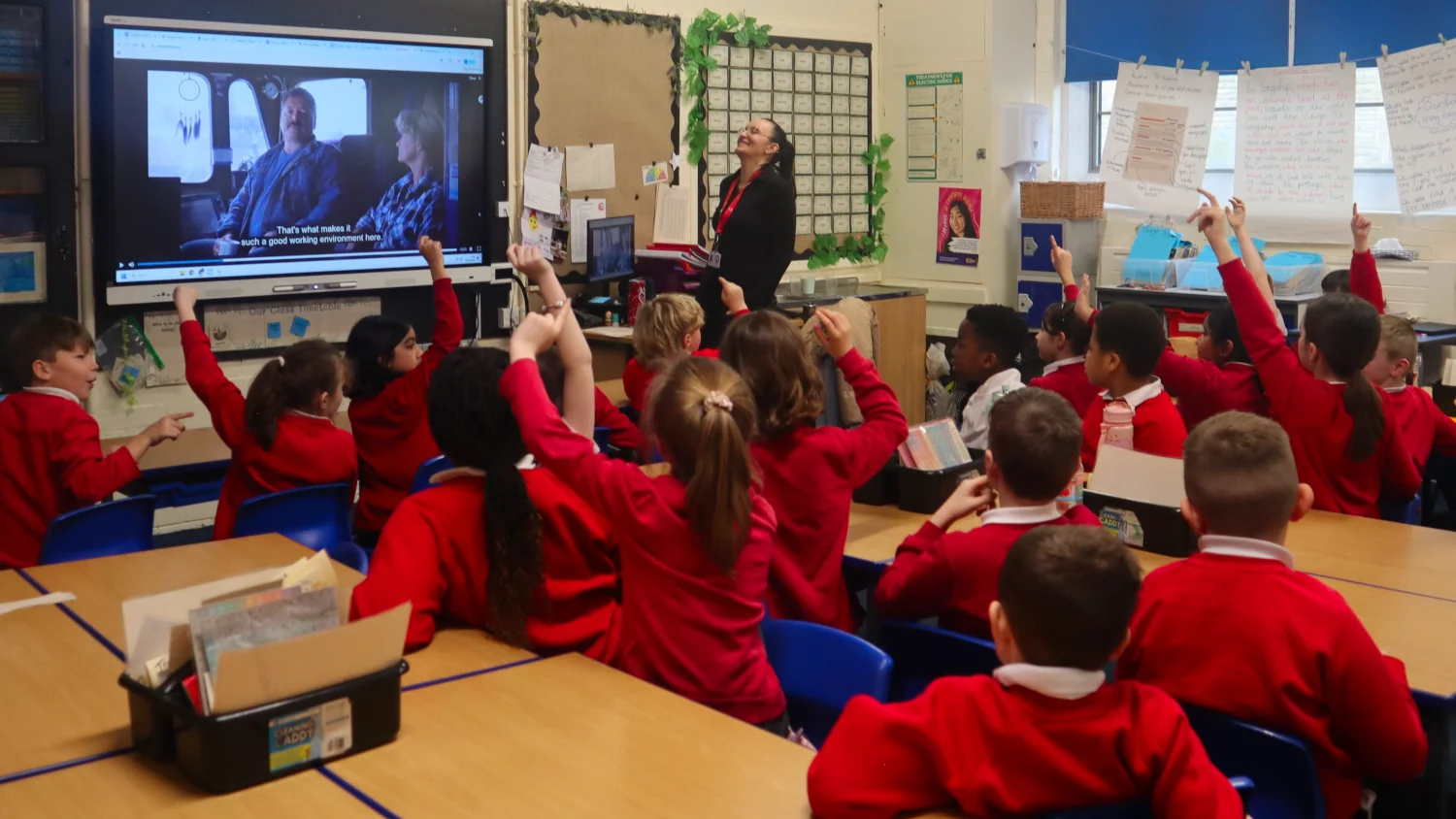
- Monday: Lyfta Time in class
A shared Lyfta session that sets up the week: classes explore the storyworld, watch the documentary, and discuss both the environment and the core themes of the film. - Wednesday: Check-in
A midpoint opportunity to reflect on feelings, build empathy and regulation strategies (see below), centred on Monday’s story. - Friday: Check-out
A chance to reflect, regulate, and prepare for the weekend.
The school generally runs the same storyworld over two weeks to allow breadth and depth of discussion around multiple ideas within the stories.
As St Mary’s is a Church of England school, storyworlds have been mapped to values by the Lyfta team so the sessions complement the personal development work being done at the school. (If this is something you would like for your school, please contact info@lyfta.com - we’d be happy to support!).
What the sessions look like
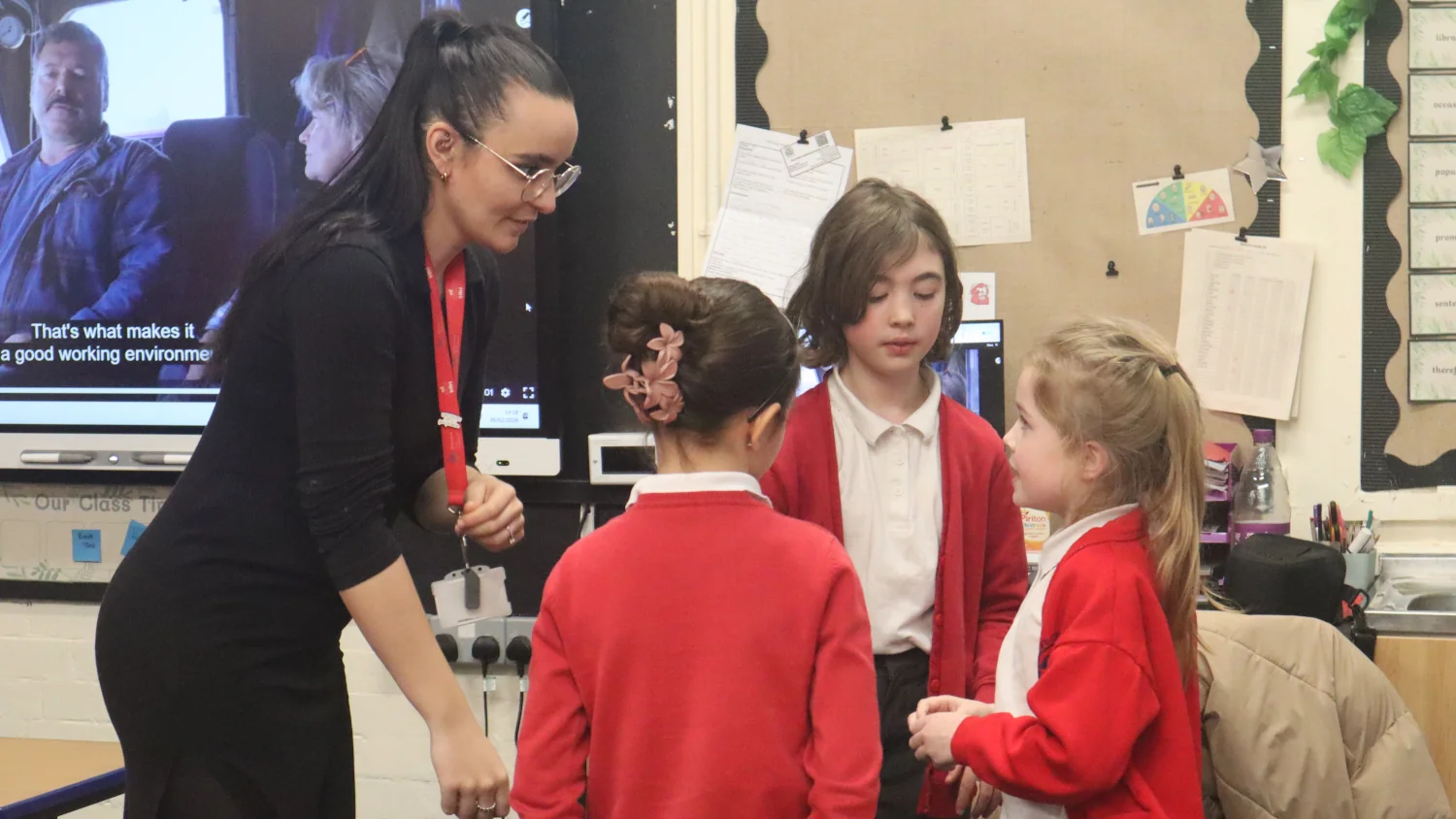
Talk-first, low-floor, high participation
The routines are designed so every child can engage. Fran is explicit here: “every child in class has access, no matter their background, their language, their needs, every child can engage and thrive.”
A key choice is reducing the pressure of producing written work as proof. Fran advises schools: “Don’t think you have to get lots of writing down for you to have evidence that Lyfta is working. Take a picture, or a small video clip. Don’t overload yourself on written examples.”
Reflection tools without creating workload
St Mary’s uses:
- Jotters/journals from Year 2 onwards. These are checked but not marked. No pressure on spelling or grammar, it’s about students getting down their thoughts and feelings to encourage reflection from all students without restrictions.
- Digital scrapbooks in Reception and Year 1
Self-regulation at St Mary’s isn’t treated as a vague concept. It’s intentional and something children practise through real examples before transferring into their lives.
In the check-in/check-out sessions, children often talk about:
- How they are feeling, what they’re grateful for, things they love about themselves.
- Then, they apply the same questions to the person within the Lyfta film. This is a powerful empathy building exercise.
- They may also reflect on how characters feel throughout a film, such as through a mood graph, consider how they regulated, and whether they can apply that themselves.
Self-regulation in action: children using strategies beyond the classroom
One of the clearest signals of impact at St Mary’s is that children are beginning to choose different strategies to support their own mental health both inside the classroom and at home.
Fran has noticed that when pupils experience dysregulation, they are increasingly drawing on storyworlds:
- “I’m going to listen to some music to calm me down.”
- “I’m going to bake like the strudel sisters do.”
- “I’m going to ask mum if we can have a sit down meal… because I feel a bit lonely and I want people around me.”
These are small sentences, but they represent a big shift: children moving from emotion-as-overwhelm to emotion-as-something-they-can-work-with.
Oracy in action: curiosity, respect, and safe questioning
Alongside wellbeing, teachers consistently utilise oracy strategies and activities to encourage deeper discussion and varied talk. St Mary’s wanted children to become more open-minded and curious - but also to learn how to ask questions respectfully.
Fran reports pupils are now: “asking curious questions, but on a respectful level, as young as five and six.”
Staff also describe the shift in pupils’ ability to make links beyond their own immediate experience: “I never thought they’d make connections to people that are so different to them.”
A selection of oracy activities to use with different components of a Lyfta session can be found here.
Standout Lyfta moments (the kind you can’t plan for)
Here are four moving examples of real impact on individual students. They showcase the ‘windows and mirrors’ opportunities that the documentaries offer, and how so often unexpected moments stick and speak to different students.
Naming loneliness → rebuilding friendships
A new child in Year 4 struggled to make friends and couldn’t explain why. After watching “Guardians of the canopy” (a storyworld about a man caring for gibbons in India), he told his mum:
“That’s how I felt… other people didn’t get him and that’s what I’m feeling like at the moment.”
That opened a conversation about loneliness and helped staff and family identify how to support social connection through his interests. He’s now happy and settled in his class with lots of new friends.
Sticky learning for a SEND pupil
After exploring the story of two sisters baking strudel in the Togetherness storyworld, a Year 6 pupil with SEND (working developmentally at around age 5–6) was in forest school, picked apples, and said:
“I know what we can make with these apples - strudel.”
A powerful example of memory, meaning and language transfer.
Courage in spoken performance
A Year 5 pupil with a significant stutter chose to read a poem aloud in assembly after connecting with the storyworld “The Singer Who Could Not Speak”, saying he wanted to be like the woman who performed despite struggling with words.
Widening aspirations
After watching ‘Music Is My Social Tool’, a story about how Izandra builds something meaningful despite having very little, one Year 5 pupil came away thinking, “if she can do it, so can I.” She asked her mum if she could try something similar - and she’s now started Stagecoach, taking a brave step into a new space and imagining a bigger future for herself.
Staff buy-in has been strong
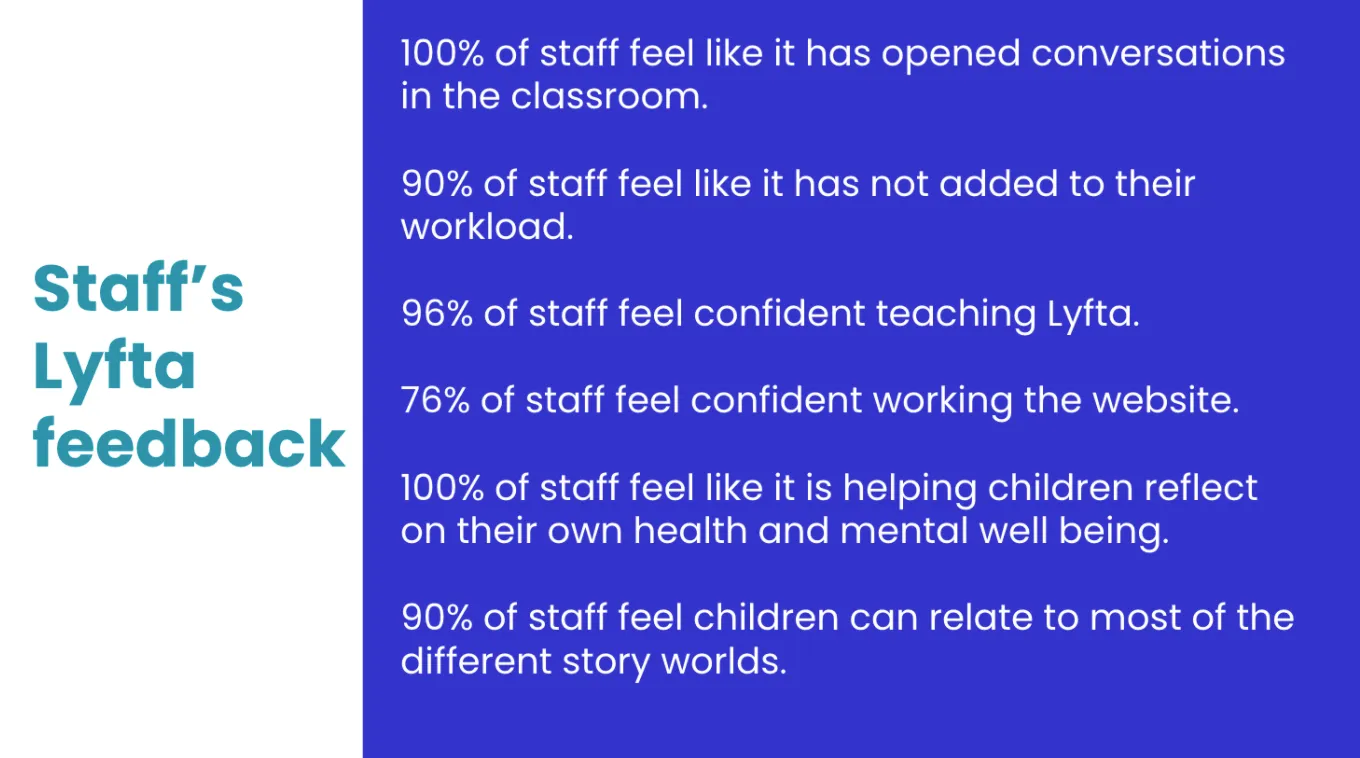
This is echoed in teacher voice:
- “It’s an easy resource to use and I love that the workload is minimal.”
- “Lyfta is helping me to build a community and team in the classroom.”
Pupil voice reflects engagement and widening perspective:
- “Lyfta is fun!”
- “I’ve never thought about music helping me feel calm but it does.”
- “You don’t know how people feel so I think a smile always helps.”
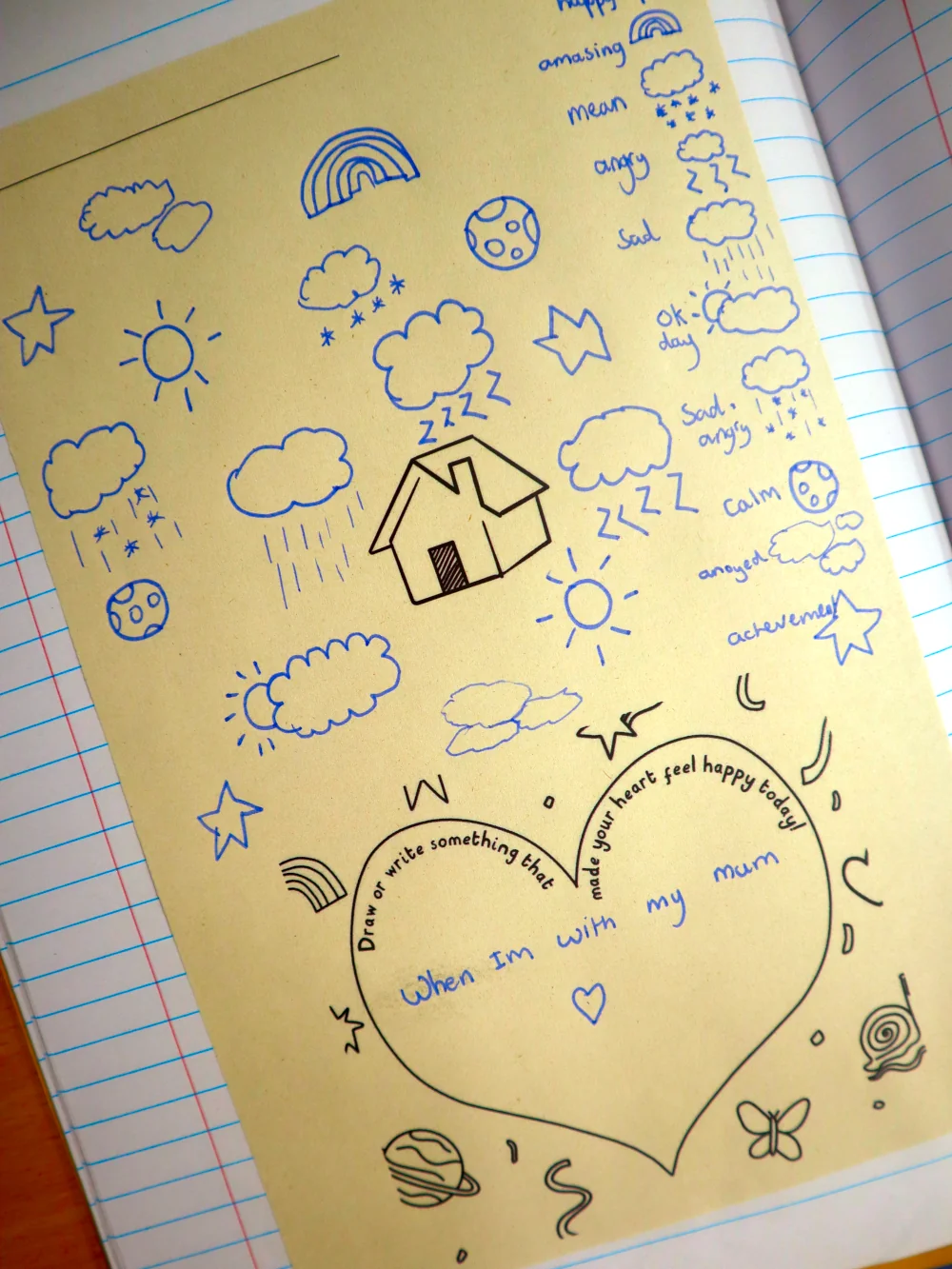
Steal this: St Mary’s prompt set and sentence stems (self-regulation + talk)
If you want to borrow the feel of St Mary’s approach, start with these five prompts in your Lyfta session, alongside the check in/out activities above:
- What did you notice?
- What did it make you feel?
- Why might someone in the story feel that way?
- Has anything like that ever happened to you (or someone you know)?
- When you feel that emotion, what helps you regulate?
And Fran’s most practical advice for inclusive oracy:
“Giving them sentence stems that’s really helped don’t automatically assume that if a child struggles with speech or communication, that they can’t access these videos.”
A selection of sentence stems to use with different components of a Lyfta session can be found here.
This impact is a testament to Francesca Robinson’s thoughtful, steady leadership at St Mary’s - turning Lyfta into a consistent, inclusive rhythm that strengthens self-regulation and oracy across the whole school. It’s also been powerfully supported by Sophie Filkin, whose trust-wide leadership has helped build engagement, shared learning, and momentum for Lyfta across Watergrove.
Finally, Fran’s advice for anyone who’s thinking about working with us, or how to get it up and running:
A huge thank you for inviting us in! If you have practice within your school that you think should be shared, we’d love to come visit! Please reach out to info@lyfta.com.


