


Lyfta supporting digital literacy in a changing world
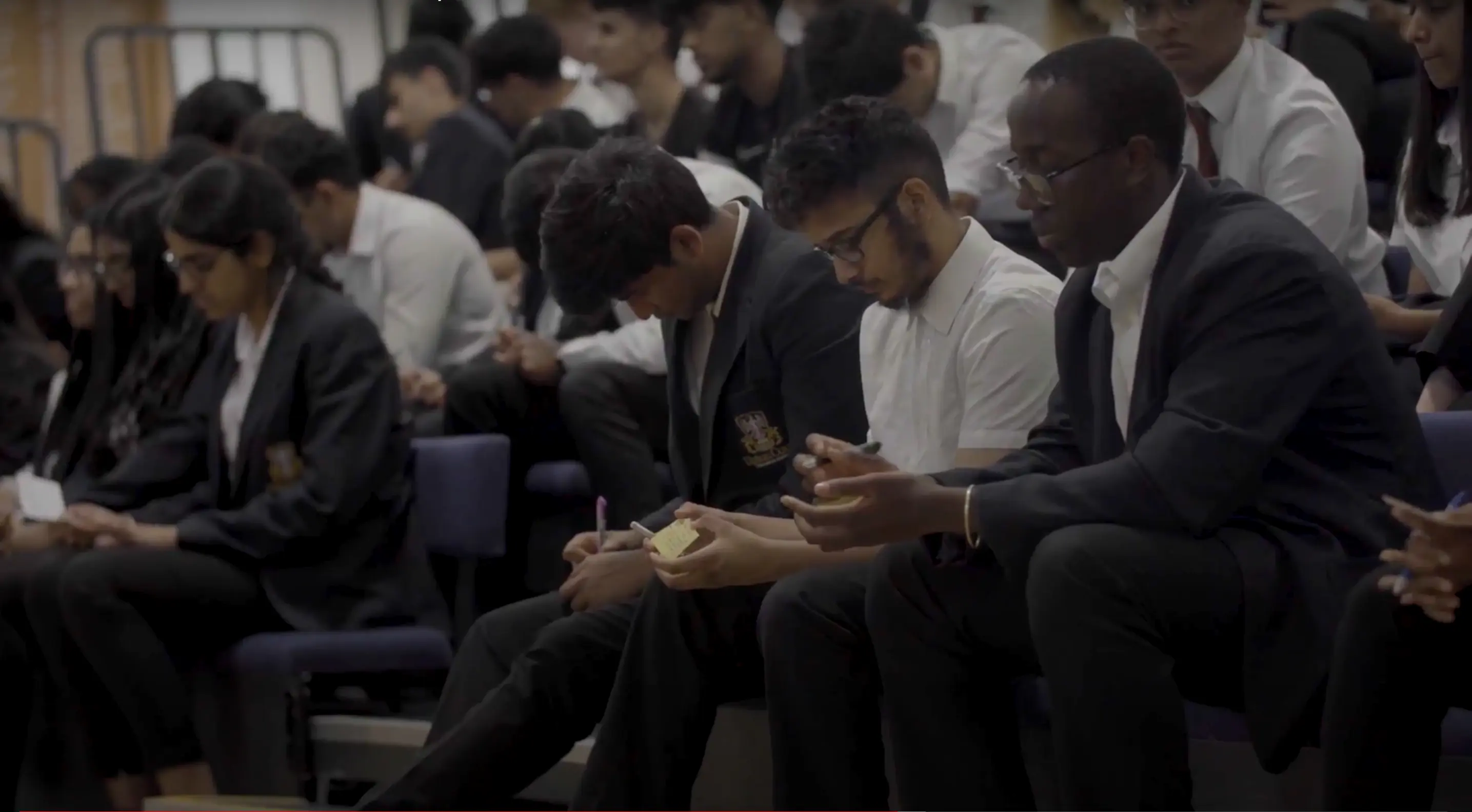
Lyfta Lead Kajal Arora described how the school has incorporated the new Critical Digital & Media Literacy (CDML) storyworlds into its wider work on AI and digital resilience:
“The critical digital learning sessions support our wider school strategy around AI and digital literacy… They help students think critically about the benefits and challenges of AI through Lyfta stories.”
She emphasised that Lyfta is now easy to deliver in form time, immersive, and a strong thinking stimulus at the start of the day.
Students also spoke about Lyfta as a trusted alternative to AI-generated content. A Year 13 student was clear that Lyfta’s authenticity matters; the very same student featured in this 2022 video when she introduced many of us to the word "sonder”, said that she “wouldn’t want to use it if it had AI-generated content.”
A vital tool for belonging, inclusion and safe dialogue
Pastoral Lead Anthony Smith explained how Lyfta has become a core part of navigating sensitive or emotional moments within a multicultural school community:
“When difficult events like the Ukraine war or Gaza conflict affected our community, Lyfta helped us create a safe space where students could engage with different viewpoints… Belonging and inclusion are key themes that Lyfta supports in the pastoral curriculum.”
He added that Lyfta sessions “linger throughout the week,” creating conversations that continue beyond the classroom.
This marks a noticeable shift from 2022, when the focus appeared to be more on preparing “future global changemakers.” In 2025, Lyfta has also become a practical tool for supporting unity, wellbeing and constructive dialogue during real-time events.
What students say Lyfta is helping them do
Year 9 students
Two Year 9 students explained how Lyfta has influenced the way they approach information and global issues:
- “I used to look at things at face value, but now I'm more observant and ask more questions… questions I wouldn't have thought to ask before.”
- “It makes global issues feel more real.”
They also described discovering new jobs, cultures and ways of life through different storyworlds.
These reflections demonstrate how Lyfta supports students in recognising and valuing multiple perspectives, encouraging them to move beyond single-story or Western-centric framings - something especially important in a highly diverse and multicultural school community.

“Lyfta introduced me to different perspectives I wouldn't have encountered otherwise… It’s helped my interest in policy… and played a part in my choice to study PPE at university.”

Year 13 student
A Year 13 student shared how Lyfta has shaped her interests and university choices; she is now applying for PPE at Oxford:
She explained that Lyfta helped her think about how policy affects real lives and led her to explore non-Western feminisms and ethical perspectives. Her reflections illustrate how, over time, Lyfta has supported a form of systems thinking: understanding how structures, privilege and real-world context shape people’s opportunities and experiences.
Why students value the 360° spaces
Across year groups, students highlighted how important Lyfta’s immersive 360° experiences are to them:
- “It's told from their voice, not filtered through editing or someone else's viewpoint. You're slowly entering their space.”
- “The 360° view makes it feel authentic, it’s raw data… You trust them more.”
Students said this helps experiences feel personal and trustworthy, and prevents the detachment they feel with more edited or abstract content.
How Lyfta’s role in the school has evolved and deepened since 2022
Based on staff and student comments, a few shifts and developments were noticed:
- From relatively new initiative → to routine practice: Lyfta is now expected every two weeks by all students and staff, and is a familiar part of the pastoral curriculum.
- From more future-oriented → to include responding to the present: Lyfta now also appears to support the school in engaging with global and local tensions.
- A stronger link to digital literacy and AI awareness: This theme did not feature in 2022, but is now explicitly part of UCGS’s strategy.
- Continued highly articulate student reflections: This time we were able to talk to students who had three years of experience, and their confidence in articulating the impact and learning experience was evident. Students discussed perspective-taking, authenticity and how Lyfta helped them approach global issues more thoughtfully.
- Growing attention to multiple perspectives & systems understanding: Across conversations, students described noticing how different cultural and social viewpoints shape real lives. They also began to question structures - how privilege, opportunity and policy interact - as they accumulated more lived experiences through Lyfta storyworlds.
- Ongoing plans for development: The school is considering expanding Lyfta use into more areas of the curriculum and supporting new staff in finding their ‘why’ behind using the platform.
Conclusion
Three years after adopting Lyfta, Upton Court Grammar School has integrated it as a regular and meaningful part of pastoral and whole-school learning. Staff use it to support unity, belonging, critical digital literacy and safe dialogue around complex issues. They also articulated its potential to be used in many other parts of the curriculum. Students describe feeling curious and connected to the real stories they encounter.
Lyfta’s role at UCGS has evolved - supporting not only global awareness, but also connection, perspective-taking, multiple worldviews, systems awareness and community cohesion, all grounded in authentic human stories. Upton Court continues to be a leader in Lyfta pedagogy and practice, generously sharing its approach and impact with others across and beyond the Trust.


